The Future Lies in Human-AI Synergy
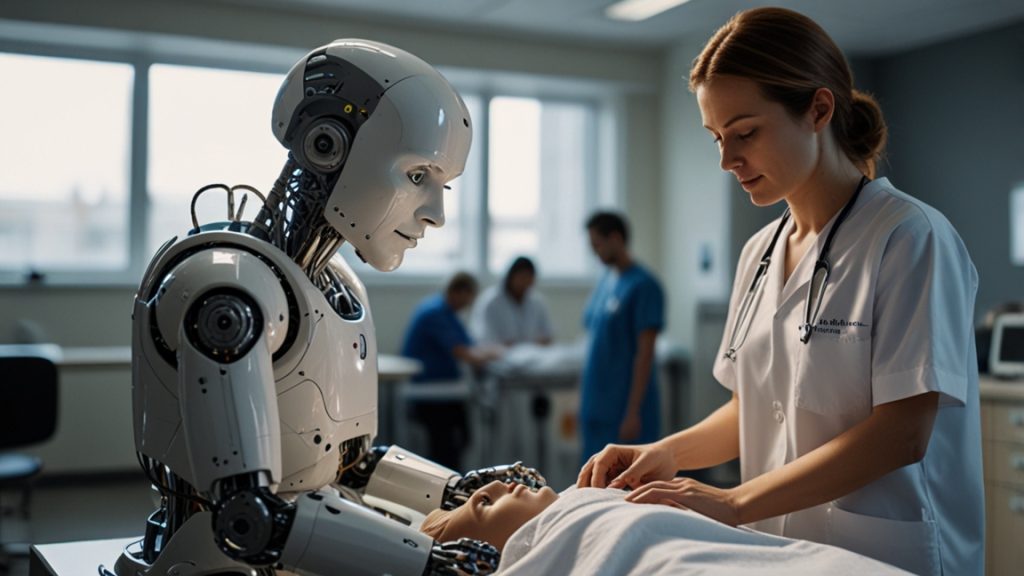
In an era marked by relentless digital disruption, businesses across the world are confronting a pivotal question: should they double down on artificial intelligence or uphold the enduring value of human expertise? Once limited to tech panels and executive boardrooms, this debate now echoes across sectors, influencing job structures, operational strategies, and how value is created.
There’s no denying AI’s transformative power. With unmatched speed and data-processing abilities, AI has become the backbone of industries like finance, logistics, and e-commerce. Amazon, for example, uses AI to streamline its supply chain, optimize inventories, and personalize the customer experience — all at a scale impossible through human effort alone.
From reducing human error to enabling faster, evidence-based decisions, AI’s appeal to companies focused on efficiency is clear. Its ability to operate 24/7 at peak performance makes it a game-changer in the pursuit of scalability and cost control.
But even in a tech-driven age, technology alone isn’t enough.
In sectors like healthcare, education, and oilfield services, human expertise remains indispensable. A doctor’s empathy, a teacher’s intuition, or an engineer’s judgment can’t be replicated by algorithms. AI may generate insights, but it takes human discernment to interpret them and make critical, context-sensitive decisions.
The divergence between AI-driven and human-centric approaches often reflects an organization’s broader values. Companies prioritizing automation typically seek speed and operational efficiency. Those valuing innovation, customer loyalty, and bespoke service, however, are more likely to double down on human capital.
Consider luxury hospitality. While AI can manage bookings and follow-ups with clockwork precision, the soul of guest experience lies in the nuanced, empathetic service offered by trained staff. Understanding a guest’s unspoken preferences or cultural sensitivities is a distinctly human strength.
This contrast underscores a growing consensus: the future is not a binary choice between AI and human beings. Rather, it’s about creating intelligent ecosystems where both can thrive in harmony. AI should not replace people — it should empower them.
In high-performing organizations, AI handles the heavy lifting — repetitive tasks, data crunching, and predictive modeling — freeing human workers to focus on creativity, leadership, and relationship-building. Employees are not displaced but elevated, playing to the uniquely human strengths that machines cannot emulate. Corporate culture plays a critical role in this evolution. Tech-driven firms often see automation as a lever for growth and innovation. Meanwhile, people-first organizations root their strategies in emotional intelligence, trust, and employee empowerment. Both approaches are valid — but the real winners will be those who master the art of integration.
Despite its benefits, AI still has limitations. It lacks emotional nuance, struggles with ethical judgment, and reflects the biases of its programming. On the flip side, a fully human model may falter on consistency, scalability, and cost. Fatigue, human error, and limitations in processing data at scale are all inherent challenges.
That’s why experts increasingly advocate for a hybrid model — one where AI augments human capabilities, not competes with them. This approach not only enhances productivity but ensures that innovation remains human-centered.
As industries continue to transform, success will depend on how well organizations balance speed with sensitivity, and automation with authenticity. The most future-ready companies won’t necessarily be those that automate the fastest — but those that humanize the smartest.
Because in the race for progress, it’s not just about being intelligent. It’s about being human.
In an era defined by rapid digital transformation, organizations around the globe face a pressing question: should they prioritize artificial intelligence or invest in the irreplaceable value of human expertise? The conversation is no longer confined to tech conferences or boardrooms — it is unfolding across industries, reshaping strategies, job structures, and the very nature of value creation.
While AI offers remarkable advantages in speed, scalability, and data-driven precision, the human factor continues to provide emotional intelligence, adaptability, and the creative thinking essential for solving complex problems.
There is no denying the power of AI. Industries like finance, logistics, and e-commerce have embraced automation to streamline operations and reduce costs. Tech giants like Amazon rely on AI to enhance supply chain efficiency, optimize inventories, and personalize customer experiences.
AI systems can process vast datasets in seconds, reducing human error and supporting faster, evidence-based decisions. For companies focused on efficiency and scalability, these benefits are game-changing.
But technology alone is not a silver bullet. Many sectors — including healthcare, education, and oilfield services — still depend heavily on human expertise. In these industries, the ability to make nuanced decisions, demonstrate empathy, and build relationships remains paramount. AI can generate insights, but it is experienced engineers and professionals who interpret the data and make the final call. That human judgment is still irreplaceable.
The divide between AI and human input often mirrors an organization’s strategic focus. Those prioritizing cost control and operational efficiency may adopt AI more aggressively. In contrast, companies that emphasize customer experience, innovation, or bespoke service are more likely to preserve — and elevate — the human element.
Take luxury hospitality, for example. While AI can manage bookings and automate follow-ups, the real value lies in personalized service delivered by trained staff who understand guest preferences and cultural nuances.
The future is not about choosing AI over humans or vice versa. It’s about building ecosystems where both coexist — enhancing productivity while keeping humanity at the heart of business.
Majdi Al-Sunbul
Corporate culture plays a pivotal role in determining how AI and humans integrate. Tech-forward companies see automation as a catalyst for growth, pushing the boundaries of speed and productivity. People-centric organizations, however, anchor their strategies in trust, emotional connection, and workforce empowerment. Both approaches have merit — but experts argue the future belongs to those who combine the strengths of each.
Despite AI’s strengths, challenges remain. It lacks emotional intelligence, struggles with ethical reasoning, and can reflect biases embedded in its algorithms. Job displacement is another concern, prompting broader societal discussions about the future of work.
At the same time, fully human-driven models have limitations in terms of cost, consistency, and scalability. Humans are vulnerable to fatigue and circumstance, while AI systems can operate continuously at peak performance.
This has led many experts to advocate for a hybrid approach — one where AI and human capabilities complement each other.
In the most effective organizations, AI handles routine and data-heavy tasks, freeing people to focus on higher-value functions like innovation, leadership, and customer engagement. Employees are not replaced — they are empowered. AI becomes a tool, not a threat.
The future is not about choosing AI over humans or vice versa. It’s about building ecosystems where both coexist — enhancing productivity while keeping humanity at the heart of business.
As industries continue to evolve, the ability to strike a balance between efficiency and empathy will define tomorrow’s market leaders.
The most successful companies won’t be the ones that automate the fastest, but those that humanize innovation — ensuring that progress remains not just intelligent, but also deeply human.