

Tensions Escalate in the Black Sea as Russia Suspends Grain Initiative Participation
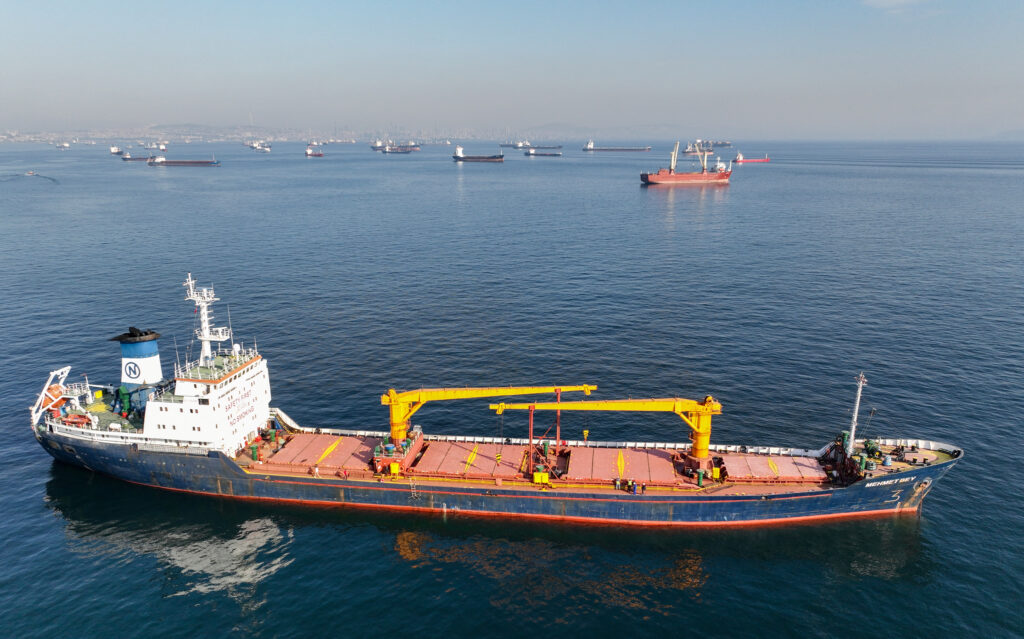
The Joint Coordination Centre officials board cargo ship Mehmet Bey as she waits to pass the Bosphorus strait off the shores of Yenikapi during a misty morning in Istanbul, Turkey, October 31, 2022. REUTERS/Mehmet Emin Calsikan
In a move that could have far-reaching consequences for both global food security and the political landscape in the region, Russia has recently suspended its participation in the UN-backed Black Sea Grain Initiative. This agreement has been crucial in allowing Ukraine to continue exporting food during the ongoing conflict. However, Moscow’s decision to step back from the pact goes beyond mere economic implications.
According to Russian propagandists, the suspension of the grain deal is seen as a form of retaliation against Turkiye. The simmering tension came to a head on July 7 when Ankara repatriated five Ukrainian commanders who had been captured by Russian troops. These commanders, who were affiliated with the Azov Regiment, a group considered a terrorist organization by Russia, had surrendered in Mariupol and were held in Turkiye for several months before being sent back to Ukraine.For Russia, this act by Turkey was viewed as a humiliating gesture, and continuing to participate in the grain agreement, which relies on Turkiye as a transit hub, could have been perceived as a sign of weakness. By withdrawing from the initiative, Russia aims to assert its strength and disapproval of Turkiye’s actions.
It is important to note that Russia’s withdrawal from the grain deal does not necessarily indicate an intention to impose a full-scale blockade of the Black Sea, as it did at the beginning of the conflict. Moreover, Moscow likely does not want to jeopardize its relations with Ankara, despite the recent tensions. Nevertheless, it cannot be denied that one of the main objectives behind Russia’s recent missile strikes on Ukrainian ports was to temporarily disrupt the country’s grain exports.Despite the differing views on the UN-supported export initiative, Russia and Turkey still maintain their diplomatic ties. In fact, the Russian president is scheduled to visit Turkiye in August, where discussions about the grain initiative will undoubtedly feature prominently. While Russia has shown its cards by suspending its participation, Turkish President Recep Tayyip Erdogan insists that Russia remains interested in continuing the agreement.
The Black Sea Grain Initiative has not only played a crucial role in sustaining Ukraine’s economy during the conflict, but it has also been an important component of global food security. Any disruptions to grain exports from the region can have significant consequences for the international food market, especially amid existing concerns about food shortages and rising prices.As the situation unfolds, the international community will closely watch how Russia’s decision affects food security, diplomatic relations, and the overall geopolitical dynamics in the Black Sea region. The suspension of the grain agreement has added another layer of complexity to an already volatile situation, underscoring the importance of finding diplomatic solutions and mitigating potential repercussions on a global scale.


