Eye Health: A Complete Guide to Protecting Your Vision and Keeping Your Eyes Healthy for Life

Eye Health: A Complete Guide to Protecting Your Vision and Keeping Your Eyes Healthy for Life
Introduction
Vision is one of the most valuable senses we possess. Our eyes allow us to read, work, learn, recognize faces, appreciate nature, navigate our surroundings and experience the world in countless ways. Yet eye health is often overlooked until blurred vision, irritation, pain or another problem becomes difficult to ignore.
Healthy eyes are not simply a matter of seeing clearly. Eye health also involves protecting the delicate structures of the eyes from injury, infection, excessive ultraviolet radiation, chronic disease and age-related changes. Many eye conditions develop gradually and may cause few or no noticeable symptoms during their early stages. Regular eye examinations can therefore play an important role in detecting problems before they threaten vision.
Modern lifestyles have also created new challenges. Long hours spent looking at computers and smartphones can contribute to digital eye strain. Increasing time indoors, inadequate sleep, poor nutrition, smoking and uncontrolled conditions such as diabetes and high blood pressure can all affect ocular health.
The good news is that many steps that protect the eyes are simple. Eating a balanced diet, wearing appropriate sunglasses, taking breaks from screens, maintaining good hygiene, controlling chronic health conditions and obtaining regular professional eye examinations can help preserve vision.
This comprehensive guide explores the importance of eye health, common eye problems, everyday habits that support healthy vision, nutrition, screen use, children’s eye health, aging, warning signs and preventive care.
Understanding the Eyes
The human eye is a sophisticated sensory organ that works much like an advanced optical system. Light enters through the cornea, passes through the pupil and lens, and is focused onto the retina at the back of the eye. The retina contains specialized cells that convert light into electrical signals. These signals travel through the optic nerve to the brain, where they are interpreted as images.
Several structures work together to make vision possible.
The cornea is the transparent outer surface at the front of the eye. It provides much of the eye’s focusing power and acts as a protective barrier.
The iris is the colored portion of the eye. It controls the size of the pupil, regulating how much light enters.
The lens is located behind the iris and changes shape to focus light at different distances.
The retina lines the back of the eye and contains light-sensitive cells. The central part of the retina, known as the macula, is particularly important for detailed central vision.
The optic nerve carries visual information from the retina to the brain.
The tear film covers the surface of the eye and helps keep it smooth, comfortable and protected. Disturbances in tear production or evaporation can contribute to dry-eye symptoms.
Because these structures are interconnected, a problem affecting one part of the eye can sometimes influence overall visual function.
Why Eye Health Matters
Good vision contributes to independence, safety, education, employment and quality of life. For children, healthy vision is essential for learning and development. For adults, clear vision supports work and everyday activities. For older people, maintaining vision can help preserve mobility and independence.
Eye health also provides clues about broader health. During an eye examination, an eye-care professional may identify changes associated with conditions such as diabetes or high blood pressure. In some circumstances, the appearance of blood vessels and other structures inside the eye can provide useful information about systemic health.
This is one reason eye care should not be viewed as separate from general healthcare. Protecting the eyes is part of protecting overall well-being.
Common Eye Problems
Eye problems range from temporary irritation to serious conditions that can cause permanent vision loss.
Dry Eye
Dry eye occurs when the eyes do not produce enough tears or when tears evaporate too quickly. Symptoms may include burning, stinging, redness, a gritty sensation, watering and fluctuating vision.
Long periods of screen use, dry environments, air conditioning, wind and certain medications can contribute to symptoms. Age and hormonal changes can also increase the likelihood of dry eye.
Simple measures such as taking regular screen breaks, avoiding direct airflow toward the eyes and following professional recommendations can help.
Persistent or severe symptoms should be evaluated by an eye-care professional.
Refractive Errors
Refractive errors are among the most common causes of impaired vision. They occur when the eye does not focus light correctly on the retina.
Myopia, or nearsightedness, makes distant objects appear blurry.
Hyperopia, or farsightedness, can make nearby objects difficult to see clearly, although its effects vary.
Astigmatism results from an irregular curvature of the cornea or lens and can cause blurred or distorted vision. Presbyopia is an age-related loss of the eye’s ability to focus on close objects. It commonly becomes noticeable in middle age.
Glasses, contact lenses and, for appropriate candidates, refractive surgery can correct many refractive errors.
Cataracts
A cataract occurs when the normally transparent lens becomes cloudy. Cataracts are strongly associated with aging, although they can also occur because of eye injuries, certain medications, health conditions or other factors.
Symptoms may include cloudy vision, faded colors, glare around lights, difficulty seeing at night and frequent changes in prescription.
Cataracts can often be treated effectively with surgery when they begin interfering significantly with daily life.
Glaucoma
Glaucoma refers to a group of diseases that can damage the optic nerve. Increased eye pressure is an important risk factor for some forms, but glaucoma can occur even when eye pressure is within a typical range.
The condition is particularly concerning because some forms develop slowly without obvious symptoms. Peripheral vision may gradually be lost before a person realizes anything is wrong.
Regular eye examinations are therefore important, particularly for people with increased risk.
Age-Related Macular Degeneration
Age-related macular degeneration, often called AMD, affects the macula and can interfere with central vision. It becomes more common with age.
A person may notice difficulty reading, recognizing faces or seeing fine details. Straight lines may appear distorted in some cases.
AMD has different forms and stages. Early detection can be important because some forms can be treated or monitored to reduce the risk of serious vision loss.
Diabetic Eye Disease
Diabetes can damage blood vessels in the retina. Diabetic retinopathy is one of the major eye complications associated with diabetes and can progress without noticeable symptoms during its early stages.
Maintaining appropriate blood glucose levels, blood pressure and cholesterol, together with recommended eye examinations, can help reduce the risk of vision-threatening complications.
People living with diabetes should follow their healthcare professional’s recommendations regarding eye screening.
Conjunctivitis
Conjunctivitis, commonly called pink eye, involves inflammation of the conjunctiva, the thin tissue covering the white part of the eye and the inner eyelids.
It can result from infections, allergies or irritation. Symptoms may include redness, watering, discharge and discomfort.
Because different causes require different approaches, people with significant symptoms should seek appropriate medical advice rather than assuming that every red eye is an infection.
The Importance of Regular Eye Examinations
One of the most effective approaches to eye health is preventive examination.
An eye examination can assess visual acuity, refractive errors and the health of various eye structures. Depending on age, symptoms and risk factors, an eye-care professional may recommend additional testing.
Regular examinations are especially important because several eye diseases can progress silently.
The appropriate frequency depends on age, medical history, family history, existing eye conditions, medications and other risk factors. There is no single schedule that applies equally to everyone.
People should follow recommendations from qualified eye-care professionals and seek evaluation sooner if they develop new or concerning symptoms.
Nutrition and Eye Health
The eyes require many of the same nutrients that support the rest of the body. A balanced diet rich in vegetables, fruits, whole grains, legumes, nuts, seeds and other nutritious foods can contribute to overall eye health.
Leafy Green Vegetables
Spinach, kale and other dark leafy greens provide nutrients and plant compounds associated with eye health. They can be incorporated into salads, soups, curries, sandwiches and other meals.
Colorful Fruits and Vegetables
Carrots are famous for their association with eyesight because they contain beta-carotene, which the body can convert into vitamin A. Vitamin A is important for normal vision.
However, carrots are not a magical cure for poor eyesight. Eating a variety of colorful vegetables and fruits provides a broader range of nutrients.
Sweet potatoes, pumpkin, peppers, tomatoes, oranges and other colorful foods can contribute to a varied diet.
Fish and Omega-3 Fatty Acids
Fatty fish such as salmon, sardines and mackerel provide omega-3 fatty acids. These fats have important roles in overall health and may also be relevant to ocular surface health.
People who do not eat fish can discuss suitable dietary alternatives with a qualified healthcare professional or dietitian.
Nuts and Seeds
Nuts and seeds provide healthy fats, minerals and other nutrients. Including reasonable portions as part of a balanced diet can support overall nutritional quality.
Hydration
Adequate fluid intake supports normal body functions and may be helpful for people experiencing dry-mouth or dry-eye symptoms, although hydration alone does not treat chronic dry-eye disease.
Screen Time and Digital Eye Strain
Computers, tablets and smartphones have become central to modern life. Although typical screen use does not mean that a person is automatically damaging their eyes, prolonged near work can cause temporary discomfort.
Digital eye strain may involve tired eyes, dryness, headaches, blurred vision and difficulty focusing.
One reason is that people often blink less frequently when concentrating on a screen. Reduced blinking can increase tear evaporation.
The following habits can help:
- Take regular breaks from close-up screen work.
- Look at distant objects periodically.
- Blink consciously when concentrating.
- Keep the screen at a comfortable distance.
- Adjust brightness and contrast to comfortable levels.
- Reduce glare.
- Maintain appropriate room lighting.
- Keep text at a comfortable size.
- Sit with good posture.
- Avoid holding screens extremely close to the face.
A commonly recommended approach is the 20-20-20 rule: after about 20 minutes of close screen work, look at something approximately 20 feet away for about 20 seconds.
The rule is a practical reminder to give the focusing system and eyes regular breaks.
Protecting Eyes From Ultraviolet Radiation
Ultraviolet radiation from sunlight can affect the eyes as well as the skin.
Long-term exposure is associated with several eye conditions, including cataracts and certain surface changes. Wearing sunglasses that provide appropriate ultraviolet protection can reduce exposure.
Sunglasses are especially useful during strong sunlight, outdoor sports, travel and other situations involving prolonged outdoor exposure.
A broad-brimmed hat can provide additional protection.
The goal is not simply to choose dark lenses. Sunglasses should provide effective ultraviolet protection, and people who need prescription lenses can discuss suitable options with an eye-care professional or optical provider.
Eye Safety at Work and Home
Many eye injuries are preventable.
People working with chemicals, machinery, dust, flying particles or other hazards should use appropriate protective eyewear. Ordinary prescription glasses may not provide adequate protection against workplace hazards.
At home, eye safety also matters when using power tools, handling chemicals, repairing equipment or participating in activities where particles can become airborne.
Children should be supervised around potentially hazardous objects and substances.
If a chemical enters the eye, immediate first aid should include flushing the eye with clean water according to established emergency guidance and seeking urgent medical care when appropriate. Serious injuries, penetrating injuries or sudden changes in vision require prompt professional evaluation.
Contact Lens Safety
Contact lenses can provide excellent vision correction when used correctly, but poor hygiene can increase the risk of eye infections.
Important habits include washing and drying hands before handling lenses, following the recommended replacement schedule and using the appropriate lens-care solution.
Contact lenses should never be shared.
People should follow the wearing schedule prescribed for their lenses and avoid using lenses in situations for which they are not designed.
Swimming or showering while wearing certain types of contact lenses can increase exposure to microorganisms. Eye-care professionals can provide specific guidance.
Pain, marked redness, light sensitivity, discharge or sudden blurred vision in a contact-lens wearer should not be ignored.
Sleep and Eye Health
Sleep is essential for physical and mental health, and adequate rest can also influence how comfortable the eyes feel.
Insufficient sleep may contribute to tired, dry or irritated eyes and can make visual tasks feel more difficult.
Maintaining a consistent sleep schedule, reducing unnecessary screen use before bedtime and creating a comfortable sleeping environment can support better overall health.
People with persistent sleep difficulties should discuss them with an appropriate healthcare professional.
Smoking and Eye Health
Smoking is harmful to many organs, including the eyes.
Smoking is associated with increased risk of several eye diseases, including cataracts and age-related macular degeneration. It can also negatively affect general cardiovascular health, which is closely connected with circulation and the health of delicate blood vessels.
Quitting smoking is one of the most valuable steps a person can take for overall health.
People who smoke and want to quit can seek support from healthcare professionals, cessation programs and evidence-based treatment options.
Eye Health and Chronic Diseases
Certain chronic diseases can have significant effects on vision.
Diabetes can damage retinal blood vessels. High blood pressure can also affect blood vessels and other structures.
Cardiovascular health, metabolic health and eye health are interconnected in several ways.
Managing chronic conditions through appropriate medical care, medication when prescribed, physical activity, nutritious eating and regular monitoring can therefore contribute to long-term eye health.
People should never stop or change prescribed medication without discussing it with their healthcare professional.
Children’s Eye Health
Healthy vision is essential during childhood because children depend heavily on their eyesight for learning and development.
A child may not always recognize or communicate that vision is blurry. Parents, teachers and caregivers should pay attention to signs such as:
- Frequently sitting very close to screens or books.
- Squinting.
- Covering one eye.
- Tilting the head while looking at objects.
- Frequent headaches after visual tasks.
- Difficulty reading the board.
- Avoiding reading or other visually demanding activities.
- Poor hand-eye coordination.
- An eye that consistently turns inward or outward.
Children should receive vision screening and professional eye examinations when recommended.
Early identification of vision problems can be particularly important because some childhood conditions may interfere with normal visual development if untreated.
Eye Health in Older Adults
Aging does not automatically mean losing useful vision, but several eye conditions become more common with age.
Cataracts, glaucoma, AMD and other conditions can affect older adults. Regular examinations can help identify problems early.
Older adults should also consider the relationship between vision and fall prevention. Poor vision can make it more difficult to navigate stairs, uneven surfaces and unfamiliar environments.
Good lighting at home, appropriate corrective lenses and regular eye care can contribute to safer daily living.
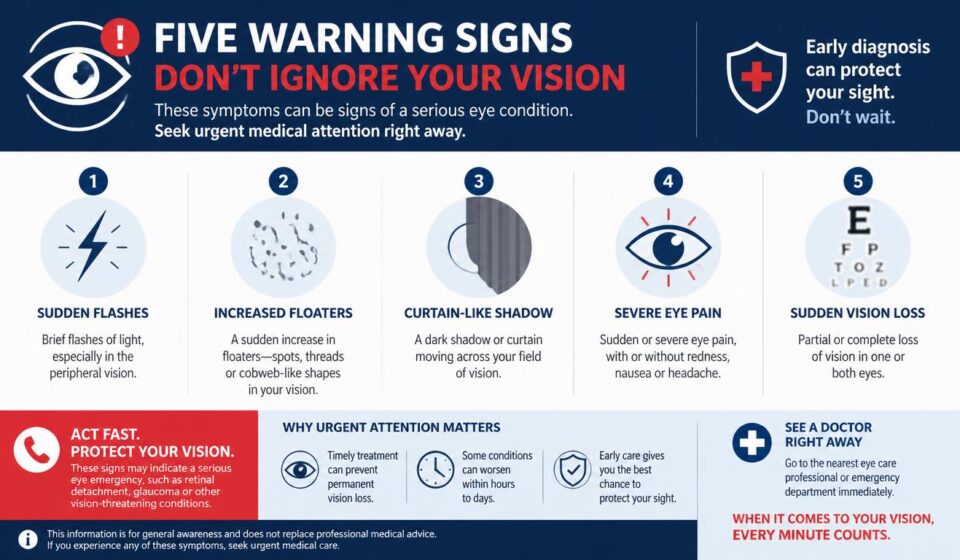
Warning Signs That Should Not Be Ignored
Some eye symptoms require prompt professional attention.
Seek urgent medical evaluation for symptoms such as:
- Sudden loss of vision.
- Sudden major changes in vision.
- New flashes of light.
- A sudden increase in floaters.
- A curtain or shadow appearing across the field of vision.
- Severe eye pain.
- Significant redness accompanied by pain or visual changes.
- Sudden double vision.
- Eye injury involving a penetrating object.
- Chemical exposure to the eye.
- Severe light sensitivity with other concerning symptoms.
These symptoms can sometimes indicate emergencies in which early treatment is important.
Can Eye Exercises Improve Vision?
Eye exercises are sometimes promoted online as a way to eliminate glasses or reverse common refractive errors. Claims should be approached cautiously.
Certain exercises may be prescribed by professionals for specific visual conditions, particularly problems involving eye coordination or focusing. However, exercises should not be presented as a universal cure for myopia, cataracts, glaucoma or other structural eye diseases.
People experiencing changes in vision should seek an appropriate eye examination rather than relying on unproven methods.
Myths About Eye Health
Myth: Eating carrots gives you perfect eyesight.
Carrots provide beta-carotene and can be part of a healthy diet, but eating large quantities does not eliminate refractive errors or guarantee perfect vision.
Myth: Wearing glasses makes the eyes weaker.
Correctly prescribed glasses do not make healthy eyes dependent on them or cause the eyes to become weaker.
Myth: If you can see clearly, your eyes must be healthy.
Not necessarily. Some eye diseases can progress without obvious symptoms.
Myth: Only older people need eye examinations.
Children and younger adults can also have vision problems and eye diseases. Examination schedules should be based on age, risk factors and professional recommendations.
Myth: All eye redness is harmless.
Redness can have many causes. Persistent, painful or severe redness deserves professional assessment.
Building a Daily Eye-Health Routine
Protecting vision does not require complicated routines.
A practical daily approach can include:
Morning: Begin the day with adequate hydration and a nutritious breakfast. If spending time outdoors, use appropriate UV protection.
During work: Keep screens at a comfortable distance and take regular breaks. Blink frequently and adjust lighting to reduce glare.
During meals: Include vegetables, fruits, whole grains, legumes, nuts, seeds and other nutrient-rich foods.
During outdoor activities: Use suitable protective eyewear where there is risk of injury.
At night: Remove contact lenses according to professional instructions and give the eyes adequate rest.
Throughout the year: Keep recommended medical and eye examinations and maintain control of conditions such as diabetes and high blood pressure.
A Lifestyle Approach to Long-Term Vision
Eye health is closely connected to the broader concept of healthy living.
Regular physical activity supports cardiovascular and metabolic health. A balanced diet supplies essential nutrients. Avoiding tobacco reduces exposure to substances associated with eye disease. Adequate sleep supports recovery and general well-being. Managing chronic diseases can reduce the risk of complications that affect the eyes.
This means eye care should not be treated as a single activity. It is a long-term commitment involving daily habits, preventive examinations and prompt attention to warning signs.
The Future of Eye Care
Eye care is changing rapidly. Advances in imaging, diagnostic technology, surgical techniques, medicines and digital health are improving the ability of clinicians to detect and manage eye conditions.
High-resolution retinal imaging can help professionals examine structures that cannot be assessed adequately through ordinary vision tests alone. New approaches to monitoring and treatment continue to emerge.
Artificial intelligence is also being studied and used in some settings to assist with the detection and classification of certain eye diseases. Such technology can support healthcare professionals, but it does not remove the need for clinical judgment and appropriate patient evaluation.
The future of eye care is likely to involve increasingly personalized prevention, earlier detection and more precise treatment.
When to See an Eye-Care Professional
People should arrange professional eye care when they experience persistent blurred vision, difficulty focusing, recurring headaches associated with visual tasks, unexplained eye discomfort, changes in peripheral vision or other concerning symptoms.
People with diabetes, a family history of glaucoma or other risk factors may require more frequent monitoring.
Children with possible vision difficulties should be evaluated rather than waiting for the problem to resolve on its own.
Most importantly, sudden or severe changes in vision should be treated as potentially urgent.
Conclusion
Healthy eyes are essential for living, learning, working and enjoying everyday life. Although some eye conditions cannot be completely prevented, many risks can be reduced through informed choices and regular professional care.
A balanced diet provides nutrients needed for normal eye function. Physical activity and control of chronic conditions support overall health. Sunglasses and protective eyewear reduce environmental and injury-related risks. Safe contact-lens practices help prevent infections. Sensible screen habits can reduce digital eye strain. Avoiding tobacco can protect both eye and general health.
Perhaps the most important lesson is that clear vision does not always mean healthy eyes. Several serious conditions can develop quietly, which makes regular eye examinations an important part of preventive healthcare.
Eye health should therefore begin long before a problem becomes noticeable. By protecting the eyes from avoidable hazards, maintaining healthy lifestyle habits and seeking professional advice when symptoms appear, people can give themselves the best opportunity to preserve useful vision throughout life.
The eyes may be small organs, but their role in human life is enormous. Caring for them is an investment in independence, productivity, safety and quality of life—not just today, but for the years ahead.
Visual Generation Prompts for the Article
1. Anatomy of the Human Eye
Prompt: Create a highly detailed medical infographic showing the anatomy of a healthy human eye in cross-section, clearly illustrating the cornea, iris, pupil, lens, retina, macula, optic nerve and vitreous body, clean clinical design, realistic anatomical proportions, educational labels, white background, professional healthcare magazine style, high resolution.
2. Healthy Lifestyle for Eye Health
Prompt: Create a realistic editorial healthcare illustration showing a healthy lifestyle supporting eye health: colorful vegetables and fruits, leafy greens, nuts, fish, water, sunglasses, a person exercising outdoors and a peaceful sleeping environment, sophisticated medical magazine aesthetic, natural lighting, high resolution.
3. Digital Eye Strain
Prompt: Create a modern healthcare illustration of a person working on a laptop and smartphone while demonstrating healthy screen habits, comfortable posture, appropriate screen distance, reduced glare and regular eye breaks, subtle visual representation of eye fatigue, professional editorial infographic style.
4. UV Protection
Prompt: Create a photorealistic health-awareness image showing a person outdoors wearing UV-protective sunglasses and a wide-brimmed hat on a bright sunny day, subtle scientific visualization of ultraviolet rays being blocked by sunglasses, clean composition, premium health magazine photography style.
5. Common Eye Diseases
Prompt: Create a professional medical infographic comparing healthy eye, cataract, glaucoma, diabetic retinopathy and age-related macular degeneration, scientifically accurate conceptual visualization, clearly separated sections, clean typography space, educational healthcare publication design.
6. Children’s Eye Health
Prompt: Create a warm, realistic healthcare editorial image of a school-age child reading a book at an appropriate distance, sitting with good posture and adequate lighting, parent observing healthy visual habits in the background, bright natural environment, eye-health awareness campaign style.
7. Eye Examination
Prompt: Create a highly realistic ophthalmology clinic scene showing an eye-care professional conducting a comprehensive eye examination using modern diagnostic equipment, patient seated comfortably, professional medical environment, clean and reassuring atmosphere, high-detail healthcare photography.
8. Nutrition and Vision
Prompt: Create a visually rich overhead composition of foods associated with a balanced diet for eye health, including spinach, kale, carrots, pumpkin, colorful peppers, oranges, berries, nuts, seeds and fatty fish, natural textures, realistic food photography, premium health magazine style.
9. Contact Lens Safety
Prompt: Create an educational healthcare illustration demonstrating proper contact lens hygiene, clean hands, contact lens case, lens solution and safe handling technique, minimal clinical background, realistic details, professional eye-care brochure aesthetic.
10. Warning Signs of Eye Emergencies
Prompt: Create a serious but clear medical awareness infographic illustrating sudden flashes, increased floaters, a curtain-like shadow, severe eye pain and sudden vision loss as warning signs requiring urgent medical attention, sophisticated clinical design, accessible visual symbols, no graphic imagery.
11. Eye Health Across the Lifespan
Prompt: Create a beautiful editorial illustration showing eye health across different life stages—from a young child to an adult and an older person—connected by a visual timeline emphasizing preventive eye care, nutrition, protection and regular examinations, optimistic healthcare magazine aesthetic.
12. Final Hero Image
Prompt: Create a premium photorealistic hero image for a feature article about eye health: close-up of a healthy human eye reflecting a beautiful natural landscape, subtle scientific and lifestyle elements blended into the composition, sharp detail, realistic iris texture, soft natural lighting, sophisticated medical publication cover style, wide horizontal composition, space for headline text.